
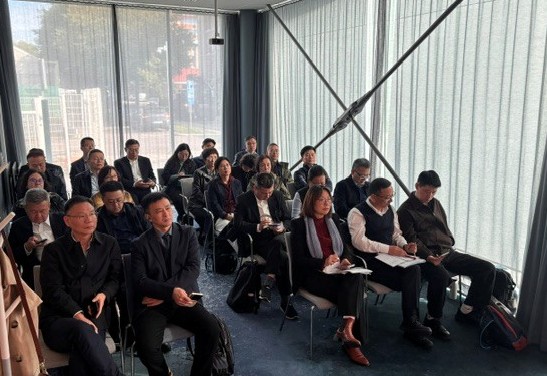
On 22 September 2026, I had the opportunity to deliver a presentation in English at Västsvenska Handelskammaren (West Sweden Chamber of Commerce), supported by an interpreter, to a delegation of 25 officials from the “State Taxation Administration (STA) of China”.
The engagement originated from an inquiry received in mid-August:
“Will it be of interest to you to deliver a presentation to our delegation as you have described on your website, for about 2 hours including translation time? The delegation will also share their experiences with you, which may be beneficial to your clients. Their focus topic is tax-related issues, including customs and duties in cross-border scenarios.”
This developed into a presentation titled “Customs and VAT Considerations in Cross-Border EU Trade.” The session was designed as a one and a half hour presentation including interpretation, followed by questions, and discussion.
The Future of EU Customs
The presentation began with an overview of the regulatory framework governing EU customs, including the development of the Authorised Economic Operator (AEO) programme (Link), the Union Customs Code (UCC), and the recently adopted EU Customs Reform Package (link). Particular attention was given to the establishment of the new EU Customs Authority and the future EU Customs Data Hub, which is intended to replace the current landscape of 111 separate customs IT systems across the European Union.
We also discussed the rapidly expanding number of import and export restrictions currently affecting international trade. Today, businesses must navigate hundreds of customs-related prohibitions, restrictions, and regulatory requirements, a trend that is expected to accelerate significantly in the coming years.
Protecting the Internal Market
The next part of the presentation explored the principles behind the EU internal market and how trade policy is increasingly used to protect domestic industries. Examples included the use of surveillance licenses, tariff quotas, anti-dumping measures, safeguard measures, and environmental levies. Following the presentation, the delegation requested practical examples involving imports from China.
One particularly illustrative case concerned imports of iron and steel screws, bolts, and nuts, where the combined financial burden can exceed 115% of the product value. The example highlighted a growing layer of regulatory and financial requirements, including:
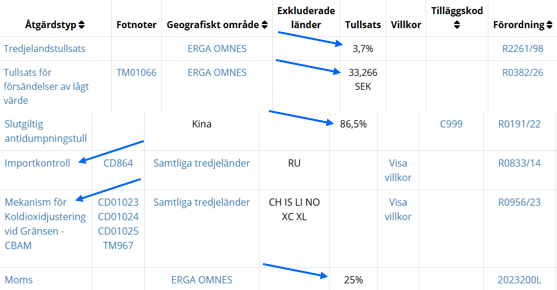
● Standard third-country customs duties of 3.7%
● Low-value consignment fees of €3 per customs item
● Anti-dumping duties of 86.5%
● Import controls requiring importers to demonstrate, through Mill Test Certificates and supporting documentation, that the products do not contain Russian iron or steel
● CBAM obligations, requiring the reporting of direct and indirect CO₂ emissions and the purchase of Emission Allowances
● Import VAT of 25%
Together, these requirements provide a clear illustration of the increasing complexity associated with importing goods into the European Union.
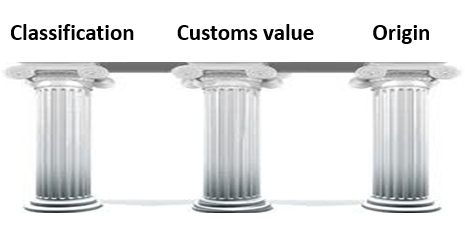
The Three Pillars of the Customs declaration
VAT Compliance: The Most Overlooked Risk Area
The final section focused on VAT compliance (Link).
We began by reviewing the Swedish import VAT reporting requirements. In addition to customs value and customs duties, businesses must identify and report supplementary costs that form part of the VAT taxable amount. While many companies obtain customs values and duties from reports issued by the Swedish Customs Authority, the collection and reporting of additional costs often remain a challenge.
The discussion then moved to the documentation requirements for supplying goods without VAT to customers in other EU Member States and outside the EU. In my experience, this remains one of the most commonly misunderstood areas of indirect taxation. Most companies lack processes to demonstrate that the conditions for a VAT-exempt supply have been fulfilled.
Under EU VAT legislation, companies that cannot provide the required evidence of cross-border transport should generally invoice with VAT. Only when the prescribed documentation requirements have been satisfied can the VAT treatment be corrected and, where applicable, credited back to the customer.
Conclusion
The session provided an opportunity to discuss both the strategic direction of EU customs reform and the practical compliance challenges faced by companies engaged in international trade. As customs, sustainability, sanctions, and VAT requirements continue to expand, the importance of robust trade compliance processes has never been greater.
Tullkompetens AB assists companies with a comprehensive Customs and Trade Compliance Analysis based on their customs processes and supply chains. We work from a market-oriented customs and tax perspective, and the analysis results in a proposed action plan together with support in the implementation of approved improvements. Tullkompetens can also support the development of customs and trade compliance competence (Link) within the organisation, tailored to the requirements of different roles.
